Dr. Gymbro
←

#cycling performance

1 article
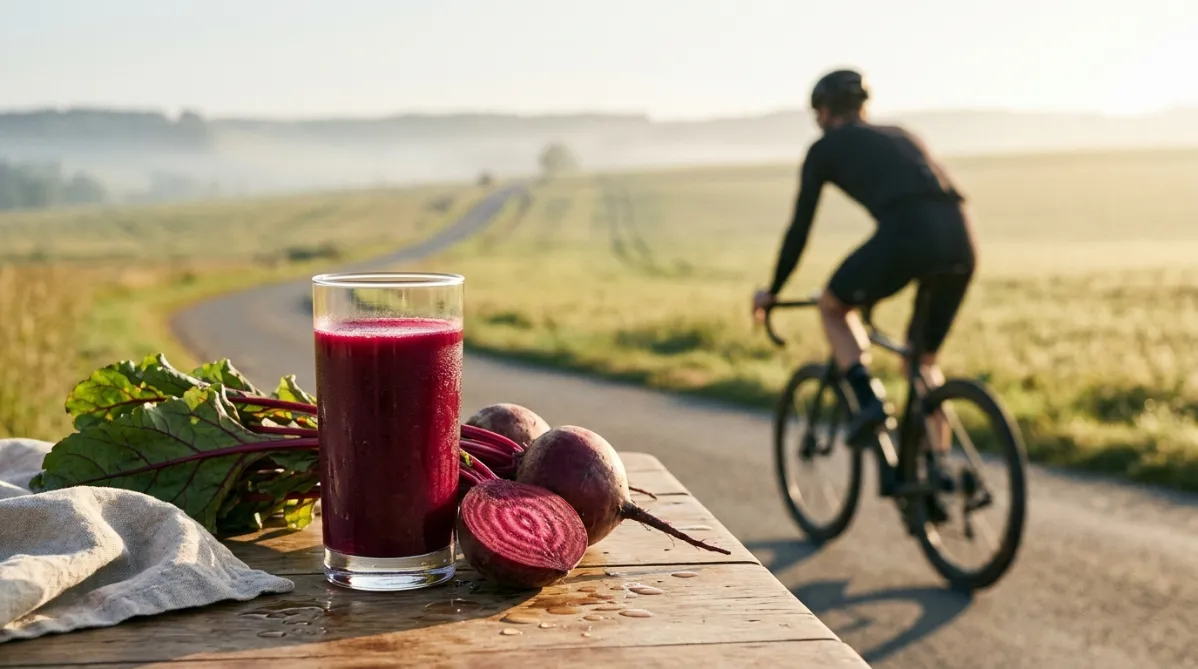
A cyclist in a fitted matte-black kit, shot from a low three-quarter angle, rides a sunlit country road at early morning, slightly out of focus with soft motion blur on the wheels. In the foreground on the left sits a rustic wooden table with a tall glass of deep magenta beetroot juice. Condensation beads on the glass, and the light catches its vivid jewel-toned color. Beside it lie two whole beetroots with their leafy red-veined greens still attached, and one halved beet shows concentric crimson-and-pink rings. A small linen napkin and a scatter of water droplets add an editorial still-life feel.

The background is a gently rolling landscape with golden-green fields and a thin ribbon of asphalt curving toward the horizon. Pale mist hangs low and warm sunlight comes from the right, creating long soft shadows and a golden rim light on the glass and the cyclist's silhouette. The shallow depth of field keeps the juice and beets crisp while the rider stays a dreamy blurred suggestion of speed.

The palette is rich magenta, burgundy, warm cream, sage green, and soft gold, with muted, slightly desaturated tones in the background so the beetroot color stands out. The composition follows the rule of thirds, with the still-life in the lower left third and open negative space in the upper right for the title. The overall look is a clean, modern lifestyle-magazine photograph with natural film-like grain, calm and athletic, and no text, logos, or futuristic elements.
nutrition

Sok z buraków przed testem czasowym: jak 0,5 L skrócił czasy jazdy na 4 km i 16,1 km o prawie 3 %

BY DR. GYMBRO ·

Małe, ale wpływowe badanie z 2011 roku sprawdziło, czy jednorazowy łyk soku z buraków może przyspieszyć prawdziwe testy czasowe na rowerze. Dziewięciu zawodowych kolarzy wypiło 0,5 L soku bogatego w azotany (ok. 6,2 mmol) około 2,5 godziny przed startem, co podwoiło stężenie nitrytu w osoczu, zwiększyło średnią moc i skróciło czasy na 4 km i 16,1 km o 2,8 % i 2,7 %. Jednocześnie zużycie tlenu (VO₂) pozostało niezmienione, co wskazuje na lepszą ekonomię jazdy, a nie na większą pojemność aerobową. Wyniki pokazują, że nawet niewielka poprawa może mieć duże znaczenie w sporcie rozstrzyganym sekundami.

This page is available in